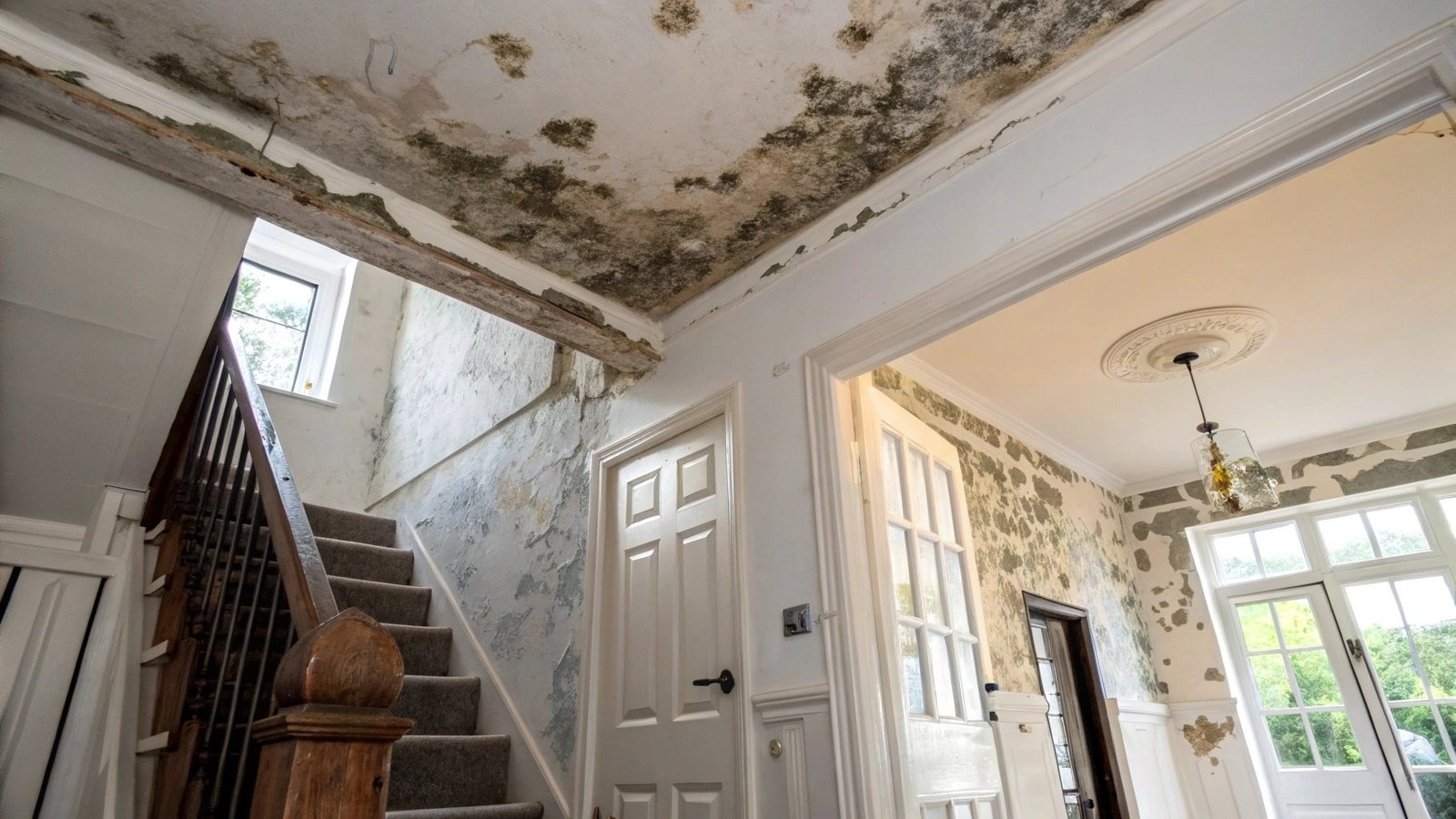
Damp is the most common problem our RICS surveyors discover during building surveys throughout Wakefield and West Yorkshire. The combination of Yorkshire's wet climate, older building stock, and heavy clay soils creates perfect conditions for moisture issues. Understanding different damp types, their causes, and effective solutions helps property owners throughout Wakefield protect their investments and maintain healthy living environments.
Why Damp is So Common in Wakefield Properties
West Yorkshire's climate delivers significant annual rainfall - typically 800-900mm per year - which is higher than the UK average. This persistent moisture, combined with the region's characteristic building styles and materials, makes damp a recurring challenge for properties throughout Wakefield and surrounding areas.
Many properties in central Wakefield date from the Victorian and Edwardian periods when builders used porous materials like brick and lime mortar without modern damp-proofing. The heavy clay soils throughout West Yorkshire retain moisture, increasing groundwater levels near building foundations. These factors combine to make damp problems particularly prevalent in the Wakefield area.
Understanding the Three Types of Damp
Our building surveyors categorize damp into three distinct types, each with different causes and requiring specific treatments. Correctly identifying which type affects your Wakefield property is essential for effective remediation.
Rising Damp
Rising damp occurs when groundwater moves up through porous building materials via capillary action. This typically affects ground floor walls up to about one meter high, creating distinctive horizontal tide marks. Properties built before 1920 throughout Wakefield often lack effective damp-proof courses, or their original DPCs have deteriorated over decades.
During Level 3 building surveys in Wakefield, our RICS surveyors use electronic moisture meters to measure dampness levels in walls. Rising damp shows high readings at floor level that decrease with height. We also look for salt deposits on wall surfaces - these hygroscopic salts draw moisture from the air even after the damp source is removed, sometimes causing confusion about whether treatment has worked.
The clay-heavy soils throughout West Yorkshire can exacerbate rising damp. Clay retains water, maintaining high soil moisture levels near building foundations. Properties in lower-lying areas of Wakefield or those near watercourses face increased rising damp risk.
Penetrating Damp
Penetrating damp enters buildings horizontally through external walls, typically following rainfall or snow. Unlike rising damp which affects lower walls, penetrating damp can appear anywhere on walls and often shows distinct patterns related to weather conditions. Our surveyors throughout Yorkshire regularly find penetrating damp caused by defective gutters, damaged pointing, cracked render, or porous brickwork in Wakefield properties.
Yorkshire's exposure to driving rain means west and south-west facing walls frequently suffer penetrating damp. Solid wall properties - common in older Wakefield buildings - are particularly vulnerable as they lack cavity construction that provides a barrier against water penetration.
Penetrating damp patches often appear after heavy rain, dry out in warm weather, and recur when rain returns. This cyclical pattern helps our surveyors differentiate penetrating damp from other moisture problems during property surveys in West Yorkshire.
Condensation Damp
Condensation is the most misdiagnosed damp type throughout Wakefield properties. It occurs when warm, moisture-laden air contacts cold surfaces, causing water droplets to form. Modern lifestyles generate significant internal moisture through cooking, bathing, washing clothes, and even breathing. Without adequate ventilation, this moisture condenses on cold surfaces like windows, walls, and corners.
Our building surveys in Yorkshire find condensation particularly problematic in properties with inadequate ventilation, single-glazed windows, poor insulation, and blocked or removed air vents. Many Wakefield homeowners inadvertently worsen condensation by blocking trickle vents or extractor fans to reduce draughts.
Black mold growth - especially in corners, behind furniture, or on north-facing walls - typically indicates condensation problems. Unlike rising or penetrating damp which affect wall structure, condensation primarily creates surface problems and mold growth, though severe long-term condensation can damage decorations and timber.
How Our Surveyors Detect Damp Problems
Accurate damp diagnosis requires professional expertise and specialist equipment. During property surveys throughout Wakefield, our RICS building surveyors use multiple detection methods to identify moisture problems and determine their causes.
Electronic Moisture Meters
We use calibrated electronic moisture meters that measure electrical resistance in building materials. Wet materials conduct electricity more readily than dry ones, allowing meters to quantify moisture content. Our surveyors take readings at multiple wall heights and locations, creating moisture profiles that help identify damp types affecting Wakefield properties.
However, moisture meters have limitations. Salt contamination from previous damp problems can give false readings, and different building materials require different meter settings. Experienced surveyors like our team interpret readings contextually, considering building age, construction type, and visible symptoms.
Thermal Imaging Technology
Our advanced Level 3 building surveys utilize thermal imaging cameras that detect temperature variations in wall surfaces. Damp areas retain heat differently than dry areas, appearing as distinct patterns on thermal images. This non-invasive technology helps identify hidden moisture problems behind plaster or within wall cavities throughout Yorkshire properties.
Thermal imaging proves particularly valuable for detecting penetrating damp paths through walls or identifying areas where insulation is missing or compressed - both factors contributing to condensation problems in Wakefield homes.
Visual Inspection and Analysis
Despite modern technology, experienced visual assessment remains crucial. Our surveyors look for characteristic signs including tide marks on walls, peeling paint or wallpaper, salt efflorescence, black mold patches, musty odors, and rotting skirting boards or floor timbers. The pattern, location, and extent of these symptoms help determine damp causes affecting properties throughout West Yorkshire.
Common Causes of Damp in Wakefield Properties
Understanding what causes damp helps property owners throughout Yorkshire prevent problems before they develop. Our building surveys consistently identify these common contributory factors in Wakefield properties.
Failed or Missing Damp-Proof Courses
Properties built before 1920 throughout Wakefield often lacked effective damp-proof courses, or featured slate DPCs that have cracked over time. Even properties with DPCs can develop problems if external ground levels have risen above the DPC, allowing moisture to bridge it. Building extensions or conservatory additions sometimes lack proper DPCs, creating damp entry points.
Defective Gutters and Downpipes
Blocked, leaking, or damaged guttering is endemic in older Wakefield properties. Overflowing gutters saturate walls with rainwater, causing penetrating damp. Downpipes that discharge too close to walls can saturate ground near foundations, increasing rising damp risk. Our surveyors always assess guttering condition during property surveys throughout West Yorkshire.
Porous or Damaged Brickwork
Yorkshire's freeze-thaw cycles can make brick surfaces porous or "blown." Water penetrates porous bricks during rain, then struggles to dry out before the next rainfall. Damaged pointing between bricks allows water entry, and cracked or spalling render provides obvious water entry points that our building surveyors document during Wakefield property surveys.
Inadequate Ventilation
Modern double glazing and draught-proofing improve energy efficiency but reduce natural ventilation in older Wakefield properties designed to "breathe." Without adequate air circulation, internal moisture builds up, causing condensation problems. Blocked air bricks, removed vents, or absent extractor fans in bathrooms and kitchens exacerbate moisture issues throughout Yorkshire homes.
Cold Bridging and Poor Insulation
Uninsulated solid walls common in older Wakefield properties create cold internal surfaces where condensation readily forms. Cold bridging through wall ties or at junctions between walls and ceilings provides cold spots attracting condensation. Our RICS surveyors frequently recommend improving insulation to reduce condensation risk in Yorkshire properties.
Health Implications of Damp
Beyond property damage, damp creates serious health risks that our surveys highlight to Wakefield homeowners. Understanding these risks emphasizes why prompt damp treatment is essential throughout West Yorkshire.
Respiratory Problems
Mold spores from damp properties can trigger asthma, worsen existing respiratory conditions, and cause allergic reactions. Children and elderly people are particularly vulnerable. Properties throughout Wakefield with persistent damp and mold pose genuine health risks requiring urgent remediation.
Dust Mites and Allergens
Damp environments encourage dust mite populations. These microscopic creatures thrive in humid conditions and their droppings cause allergic reactions. Our building surveyors often find that addressing damp problems improves not only property condition but occupant health throughout Yorkshire.
Effective Damp Treatment Solutions
Appropriate treatment depends on correctly diagnosing damp type. Our RICS surveyors recommend solutions based on thorough investigation during property surveys throughout Wakefield and West Yorkshire.
Rising Damp Solutions
Chemical damp-proof course injection involves drilling holes in mortar joints and injecting silicone or resin-based damp-proofing cream that soaks into brickwork, creating a water-resistant barrier. For Wakefield properties, this typically costs £500-£1,500 for an average terraced house depending on wall length and thickness.
Physical DPC installation involves cutting a horizontal slot through walls and inserting impermeable material - more disruptive but sometimes necessary in properties where chemical injection proves ineffective. This costs £2,000-£4,000 for typical Yorkshire terraced properties.
After DPC installation, affected plasterwork must be replaced with renovation plaster containing water-resistant additives. Standard gypsum plaster won't work - it will draw moisture from walls through hygroscopic salts, causing continued damp appearance even though the source is eliminated.
Penetrating Damp Remedies
Treating penetrating damp focuses on preventing water entry rather than installing barriers. Our surveyors throughout Wakefield recommend repairing or replacing defective gutters and downpipes, repointing brickwork with appropriate lime or cement mortar, repairing or replacing damaged render, and ensuring adequate drainage away from building walls.
External wall coatings or treatments might help in severe cases, though our building surveyors generally prefer addressing root causes rather than applying surface treatments that may trap moisture within walls. For solid wall properties throughout West Yorkshire, external wall insulation provides both weatherproofing and improved energy efficiency.
Condensation Control
Condensation requires a different approach focusing on ventilation and insulation improvements. Our surveys in Wakefield recommend installing or upgrading extractor fans in bathrooms and kitchens (building regulations require these in new builds), ensuring trickle vents in windows remain open and unobstructed, improving loft and wall insulation to raise internal surface temperatures, and installing positive input ventilation systems in severe cases.
Lifestyle changes also help - drying washing outdoors when possible, keeping lids on cooking pans, opening windows briefly after bathing or cooking, and maintaining consistent heating rather than intermittent high temperatures. Many condensation problems in Yorkshire properties resolve through behavioral changes combined with ventilation improvements.
DIY vs Professional Treatment
Property owners throughout Wakefield often wonder whether they can tackle damp problems themselves or need professional damp specialists. Our surveyors provide honest advice during building surveys about which issues require expert treatment.
When DIY is Appropriate
Some damp-related maintenance suits DIY approaches. Cleaning gutters and downpipes, repointing small areas of brickwork, improving ventilation habits, and treating minor mold growth with appropriate fungicides can all be done by competent Wakefield homeowners without specialist help.
When Professionals Are Essential
Significant rising damp requires professional damp-proofing companies with appropriate guarantees - essential for mortgage and insurance purposes. Extensive penetrating damp might indicate structural issues needing building surveyors or structural engineers. Widespread mold that returns despite treatment suggests underlying problems requiring professional diagnosis throughout Yorkshire properties.
Our RICS building surveys clearly indicate which problems require specialist attention and which can be addressed through routine maintenance, helping Wakefield property owners plan appropriate remediation budgets.
Preventing Future Damp Problems
Prevention is always cheaper than cure. Our experience surveying hundreds of properties throughout Wakefield and West Yorkshire has taught us that regular maintenance prevents many damp problems developing.
Regular Maintenance Schedule
Clear gutters and downpipes annually, especially after autumn leaf fall. Inspect external walls annually for damaged pointing or cracked render. Check roof condition regularly, replacing damaged tiles promptly. Ensure drainage around properties slopes away from walls. Maintain adequate ventilation throughout your Wakefield home.
Monitoring and Early Detection
Look for early warning signs like musty smells, minor mold patches, or slight discoloration of walls or ceilings. Address these promptly before they develop into serious problems requiring expensive treatment. Our surveyors throughout Yorkshire recommend that property owners stay vigilant for damp symptoms.
Damp and Property Value
Damp problems significantly affect property values throughout Wakefield and West Yorkshire. Our building surveys help buyers understand the extent and cost implications of damp issues.
Impact on Saleability
Visible damp, musty smells, or obvious mold dramatically reduces buyer interest in Yorkshire properties. Even minor damp raises concerns about hidden problems. Properties with active damp problems typically sell for 5-15% below market value, depending on severity and required remediation costs.
Mortgage and Insurance Implications
Mortgage lenders may refuse loans on properties with serious damp until treatment is completed. Buildings insurance can be difficult to obtain or expensive for properties with damp history. Our RICS surveys throughout Wakefield document damp problems thoroughly, ensuring all parties understand implications before property transactions complete.
Specialist Damp Reports
Sometimes our building surveys recommend specialist damp investigations beyond our surveyors' scope. These detailed reports from damp specialists provide specific treatment recommendations and often include guarantees that mortgage lenders require for Wakefield properties.
What Specialist Reports Include
Detailed moisture surveys using multiple detection methods, identification of damp causes and contributing factors, specific treatment recommendations with cost estimates, and insurance-backed guarantees (typically 20-30 years) for recommended works. For properties throughout West Yorkshire with serious damp problems, these reports prove essential for obtaining mortgage approval and protecting your investment.
The Yorkshire Climate Factor
West Yorkshire's weather patterns create particular challenges for property maintenance. Understanding how local climate affects Wakefield properties helps owners take appropriate preventative measures.
Rainfall and Wind Direction
Prevailing south-westerly winds drive rain against west and south-west facing walls throughout Yorkshire. Properties in exposed locations or on hillsides face increased penetrating damp risk. Our building surveyors always consider property orientation and exposure when assessing damp problems in Wakefield.
Seasonal Variations
Winter brings increased condensation risk as temperature differences between inside and outside grow. Spring and autumn rainfall can overwhelm gutters if not properly maintained. Summer's occasional dry spells allow damp walls to dry, but problems recur with autumn rains. Property owners throughout West Yorkshire must maintain vigilance year-round.
Case Studies from Wakefield
Real examples from our surveying work throughout Wakefield illustrate how damp problems manifest and how appropriate treatment resolves them.
Victorian Terrace - Rising Damp
A client purchasing a Victorian terraced house in central Wakefield commissioned our Level 3 building survey. We identified extensive rising damp in ground floor walls caused by a failed slate DPC and high external ground levels. Treatment involved chemical DPC injection (£1,200), lowering external ground levels (£400), and replastering affected walls with renovation plaster (£2,500). Total cost of £4,100 was negotiated off the purchase price.
1930s Semi - Condensation
Our Level 2 survey of a 1930s semi in Sandal revealed black mold in bedroom corners and behind furniture. Investigation showed this was condensation caused by inadequate ventilation and poor insulation. Treatment recommendations included loft insulation upgrade (£400), trickle vent installation in windows (£600), and improved extractor fan in bathroom (£200). Problems resolved completely within months after these modest investments.
Conclusion: Taking Damp Seriously
Damp problems affect countless properties throughout Wakefield and West Yorkshire, but they needn't be overwhelming. Correctly identifying damp types, understanding causes, and implementing appropriate solutions protects both property value and occupant health. Our RICS building surveyors provide the expert assessment necessary for diagnosing damp problems accurately during property surveys.
Whether you're buying a property in Wakefield, concerned about existing damp in your home, or simply want professional assessment of moisture problems, contact Wakefield Surveyors UK today. Our experienced surveyors deliver thorough investigations, clear explanations, and practical recommendations for addressing damp throughout Yorkshire properties.
Concerned About Damp in Your Wakefield Property?
Our RICS surveyors use specialist equipment and extensive experience to diagnose damp problems accurately throughout West Yorkshire. We provide clear reports and practical recommendations for effective treatment.
Book Your Survey Our Survey Services