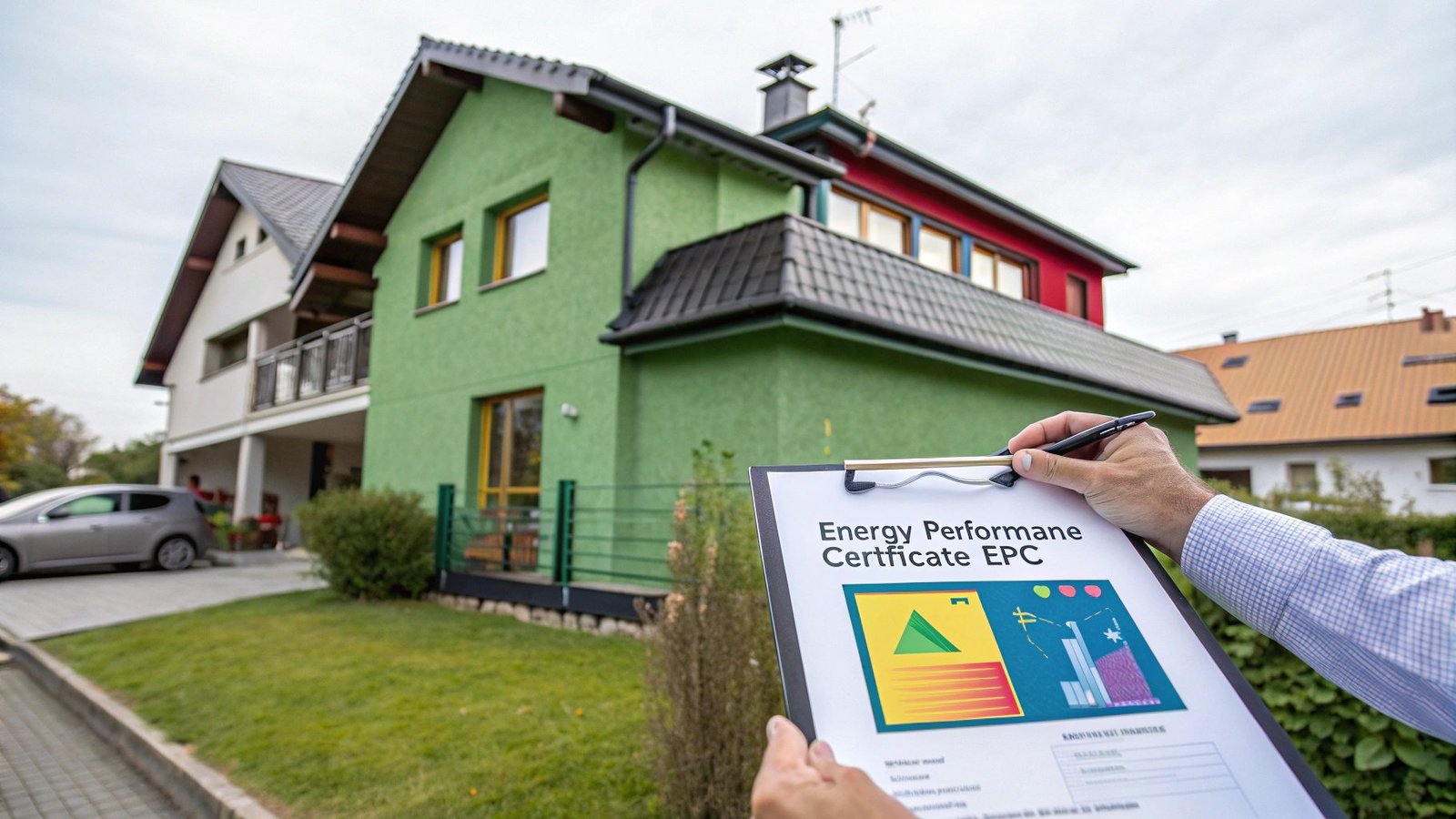
Energy efficiency has moved from a minor consideration to a critical factor affecting property values, marketability, and running costs throughout Wakefield and West Yorkshire. At Wakefield Surveyors UK, our RICS surveyors understand that energy performance is now essential to property purchase decisions, whether you're a homebuyer concerned about heating bills, a landlord meeting rental property regulations, or an investor assessing long-term property viability in the Wakefield area.
Understanding Energy Performance Certificates (EPCs)
Energy Performance Certificates have been mandatory for property sales and rentals since 2008, providing standardized assessment of energy efficiency. EPCs rate properties from A (most efficient) to G (least efficient), with most Wakefield properties falling between bands C and E.
EPCs assess various factors affecting energy consumption: insulation levels in walls, roofs, and floors; heating system type, age, and efficiency; hot water system and controls; window glazing and door quality; lighting provision; and renewable energy installations. The assessment produces both an energy efficiency rating (current performance) and an environmental impact rating (CO2 emissions), along with recommendations for improvements.
Why Energy Efficiency Matters in Wakefield Properties
Running Costs and Affordability
With energy prices significantly higher than historic levels, property running costs affect affordability substantially. Our property surveys in Wakefield frequently encounter Victorian and Edwardian properties with solid walls, single glazing, and aging heating systems—combinations that create expensive heating bills potentially exceeding £2,000-£3,000 annually.
During our building surveys throughout the Wakefield area, we assess energy efficiency even when formal EPC assessments aren't required. Our building surveyors identify features affecting running costs and recommend cost-effective improvements, helping buyers understand the true cost of property ownership beyond purchase prices and mortgage payments.
Rental Property Regulations
Landlords in Wakefield and throughout West Yorkshire face minimum energy efficiency standards. Since 2020, rental properties must achieve at least EPC band E—properties below this standard cannot legally be rented unless specific exemptions apply. These regulations significantly impact property investment decisions in the Wakefield area.
Our property investment surveys include energy efficiency assessment, helping landlords and investors understand whether properties meet rental standards or require improvements before letting. Properties currently rated F or G may require substantial investment to achieve compliance—costs that must factor into purchase negotiations and investment calculations.
Property Values and Marketability
Energy efficiency increasingly influences property values throughout West Yorkshire. Buyers prioritize properties with better energy ratings, recognizing lower running costs and reduced improvement requirements. Our property valuations consider energy performance alongside traditional factors like location, size, and condition.
Properties with very poor energy efficiency (EPC bands F or G) face marketability challenges—fewer buyers willing to purchase, lower offers reflecting improvement costs, and mortgage lenders potentially reluctant to provide financing. As RICS surveyors conducting valuations throughout Wakefield, we observe these market dynamics directly.
Energy Efficiency Challenges in Wakefield Properties
Solid Wall Construction
Many properties in the Wakefield area—particularly Victorian and Edwardian terraced houses—feature solid wall construction (single-thickness brick walls without cavities). Solid walls provide poor thermal insulation, typically achieving U-values of 2.0-2.5 W/m²K compared to modern requirements of 0.18 W/m²K.
Improving solid wall insulation requires external wall insulation (adding insulated render or cladding to exteriors) or internal wall insulation (adding insulated boarding to internal wall surfaces). Both approaches are expensive—typically £8,000-£15,000 for terraced properties—and create practical complications. External insulation changes property appearance and may face planning restrictions in conservation areas, while internal insulation reduces room sizes and requires radiator and electrical fitting adjustments.
Through our building surveys in areas like Eastmoor, Lupset, and Wakefield city centre where solid-wall terraces predominate, we advise buyers on insulation options and realistic costs, helping them understand the investment required to improve energy efficiency substantially.
Aging Heating Systems
Heating systems approaching or exceeding their design life operate inefficiently, wasting energy and money. During property surveys throughout West Yorkshire, our building surveyors regularly encounter boilers 15-25+ years old, often rated at only 60-70% efficiency compared to modern condensing boilers achieving 90%+ efficiency.
Replacing heating systems represents significant expense—typically £2,500-£4,000 for gas combi boilers in standard installations—but improvements in efficiency can reduce heating costs by 20-30% annually. Our RICS surveys assess heating system age and efficiency, advising buyers when replacement should be budgeted.
Single Glazing and Poor Windows
Original single-glazed windows remain common in period properties throughout Wakefield, particularly in conservation areas where planning restrictions limit replacement options. Single glazing loses approximately five times more heat than modern double glazing, significantly impacting energy efficiency and comfort.
Window replacement costs vary substantially based on property size, style, and whether planning approval is required—typically £4,000-£10,000+ for complete window replacement in standard terraced properties. Secondary glazing offers less expensive alternatives (£1,500-£4,000) providing thermal improvement while retaining original windows—important in conservation areas.
Assessing Energy Efficiency During Property Surveys
What Our Chartered Surveyors Evaluate
While formal EPC assessments follow specific methodologies, our building surveys in Wakefield provide broader energy efficiency analysis considering wall construction and insulation provision, roof and loft insulation depth and condition, floor insulation in suspended timber floors, window glazing type and condition, heating system type, age, efficiency, and controls, hot water system and insulation, ventilation provisions, and renewable energy installations.
We assess not just current energy performance but also improvement potential and costs. Our survey reports identify practical, cost-effective improvements that buyers can implement to reduce running costs and improve property comfort.
Thermal Imaging in Energy Assessment
Our RICS surveyors use thermal imaging cameras during property surveys to reveal heat loss patterns invisible to normal vision. Thermal images clearly show cold spots indicating missing insulation, heat escape around windows and doors, thermal bridging through structural elements, air leakage paths, and effectiveness of existing insulation measures.
This technology transforms energy efficiency assessment from theoretical calculations to visual evidence of actual thermal performance. Thermal imaging surveys conducted by our surveyors in Wakefield identify specific areas requiring attention, prioritizing improvements for maximum benefit.
Cost-Effective Energy Efficiency Improvements
Loft Insulation
Loft insulation typically offers the best return on investment for improving energy efficiency in Wakefield properties. Current recommendations specify 270mm insulation depth, but many older properties have insufficient insulation—sometimes none at all in neglected lofts.
Adding or upgrading loft insulation is relatively inexpensive—typically £400-£1,200 for standard properties—and can reduce heating costs by 15-25%. Our building surveys assess existing insulation and recommend upgrades where beneficial. For properties with room-in-roof conversions, we evaluate whether roof slope insulation meets current standards.
Heating Controls and Zoning
Modern heating controls—programmable thermostats, smart controls, and thermostatic radiator valves—significantly improve energy efficiency without major expense. Installing comprehensive controls typically costs £300-£800, potentially reducing heating costs by 10-20% through better system management.
Our surveyors assess existing heating controls during property surveys throughout the Wakefield area. Many properties have minimal controls (simple mechanical thermostats without programming), representing straightforward improvement opportunities.
Draught Proofing
Draught proofing around windows, doors, and other openings reduces heat loss at minimal cost. Professional draught proofing typically costs £200-£500 for standard properties, potentially saving 5-10% of heating costs annually while significantly improving comfort.
During property surveys, we identify excessive draughts and recommend appropriate sealing. This is particularly important in older Wakefield properties where original joinery has gaps and modern replacement windows may lack proper sealing.
Major Energy Efficiency Improvements
Solid Wall Insulation Projects
For properties in Wakefield with solid wall construction, wall insulation represents the single most impactful energy efficiency improvement—but also the most expensive and disruptive. External wall insulation (EWI) involves fixing insulation boards to external walls and applying protective render or cladding. This approach preserves internal space but changes external appearance and may require planning permission, particularly in conservation areas common throughout Wakefield.
Internal wall insulation (IWI) adds insulated plasterboard to internal wall surfaces. This approach avoids external appearance changes but reduces room sizes, requires substantial internal work (moving radiators, sockets, architectural details), and can create cold bridging issues if not expertly installed.
Our RICS building surveyors advise buyers considering solid wall properties in the Wakefield area about realistic insulation costs (typically £8,000-£15,000) and practical implications of different approaches.
Heating System Replacement
Modern condensing gas boilers operate at 90%+ efficiency compared to 60-70% for old non-condensing boilers common in older Wakefield properties. Replacement costs are substantial but energy savings meaningful—potentially £300-£500+ annually depending on property size and heating usage.
Future regulations may restrict gas boilers in new installations, though existing boilers can continue operating. Alternative heating technologies—heat pumps, infrared heating, hydrogen boilers—are emerging but currently expensive and may not suit all property types. Our surveyors provide realistic advice about heating system options for properties throughout West Yorkshire.
Window Replacement and Glazing
Replacing single glazing with modern double or triple glazing substantially improves thermal performance and comfort. However, costs are significant (£4,000-£10,000+ for complete window replacement in typical terraced properties), and planning restrictions may apply in conservation areas throughout Wakefield.
Our property surveys assess window condition, thermal performance, and whether replacement is necessary or beneficial. Sometimes, windows requiring replacement for condition reasons (rot, failure) justify investing in high-efficiency glazing; other times, serviceable windows may not warrant replacement purely for energy efficiency.
Renewable Energy and Sustainable Technologies
Solar Photovoltaic Systems
Solar PV installations generate electricity, reducing energy bills and providing income from excess generation. Installation costs have decreased substantially—typically £5,000-£8,000 for standard domestic systems—though financial returns depend on energy usage patterns, export tariffs, and system sizing.
During building surveys in Wakefield, we assess whether existing solar installations are properly installed and maintained. For properties without solar PV, we advise whether roof orientation, pitch, and condition make installation viable—south-facing roofs at appropriate pitches offer best performance.
Heat Pumps and Alternative Heating
Air source and ground source heat pumps offer alternatives to gas boilers, extracting heat from outside air or ground and concentrating it for space and water heating. These systems work most efficiently in well-insulated properties with underfloor heating or oversized radiators.
Heat pump installation costs are substantial (£10,000-£20,000+ depending on system type and property characteristics), and they may not suit all Wakefield property types—particularly older properties with limited insulation and standard radiator systems. Our building surveyors assess heat pump suitability during property surveys, providing realistic advice about feasibility and costs.
EPC Ratings and Property Types in Wakefield
Victorian and Edwardian Terraced Properties
These properties—prevalent throughout Wakefield—typically achieve EPC ratings of D or E, occasionally dropping to F for particularly poor examples with minimal improvements. Solid walls, limited insulation, and older heating systems constrain efficiency, though thoughtful improvements can raise ratings to C.
Our building surveys in areas like Belle Vue, Eastmoor, and Wakefield city centre regularly assess these property types. We help buyers understand realistic energy efficiency expectations and prioritize improvements offering best value.
Post-War and Modern Properties
Properties built from the 1950s onwards typically feature cavity wall construction, offering better baseline insulation than solid-wall predecessors. With modern heating systems and reasonable insulation, these properties often achieve EPC ratings of C or D, sometimes reaching B with high-efficiency improvements.
Through our property surveys throughout West Yorkshire, we find that energy efficiency varies significantly within this category based on construction quality, insulation standards at time of construction, and improvements made subsequently.
New-Build Properties
Current building regulations require high energy efficiency standards, so new-build properties in the Wakefield area typically achieve EPC ratings of B or even A. These properties feature substantial insulation, efficient heating systems with advanced controls, high-performance glazing, and often renewable energy installations.
Our new-build snagging surveys assess whether energy efficiency features are properly installed—missing insulation, inadequate air-tightness, or poorly commissioned heating systems can undermine designed performance.
Future Energy Efficiency Regulations
Evolving Standards for All Properties
Energy efficiency regulations continue tightening. Current rental property requirements (minimum EPC band E) may become more stringent, potentially requiring C ratings in future years. Owner-occupied properties face fewer current requirements but may face regulations eventually, particularly if property market conditions change.
For buyers purchasing properties in Wakefield and West Yorkshire, considering future requirements is prudent. Properties currently below likely future standards may require improvement investment, affecting long-term ownership costs and resale values.
Impact on Wakefield Property Market
As RICS surveyors conducting property valuations throughout Wakefield, we observe that energy efficiency increasingly influences buyer decisions and property values. Properties with very poor efficiency face reduced demand and lower values, while highly efficient properties command premiums.
This trend will likely accelerate as regulations tighten, energy costs remain elevated, and environmental awareness grows. Buyers making property purchase decisions today should consider energy efficiency alongside traditional factors—location, condition, size—recognizing its growing importance to property values and marketability.
FAQs About Energy Efficiency Surveys and EPCs
Is an EPC the same as an energy efficiency survey?
EPCs are standardized assessments following specific methodology, primarily for regulatory compliance. Energy efficiency surveys conducted by our building surveyors during property surveys provide broader, more detailed analysis tailored to your specific property and circumstances. We assess actual condition, identify specific improvement opportunities, and provide realistic cost estimates—going beyond standard EPC recommendations.
Can I improve my property's EPC rating cost-effectively?
Yes, several improvements offer good value. Loft insulation (£400-£1,200) typically provides excellent returns. Modern heating controls (£300-£800) improve efficiency substantially. Draught proofing (£200-£500) is inexpensive with meaningful benefits. Our building surveys identify which improvements offer best value for your specific property in Wakefield.
What if I'm buying a property with a poor EPC rating?
Poor EPC ratings aren't necessarily deal-breakers, but they require careful consideration. Our surveyors assess improvement potential and costs during property surveys, helping you understand the investment required to improve efficiency. You can use this information to negotiate purchase prices or decide whether the property suits your budget and requirements.
Do period properties in Wakefield always have poor energy efficiency?
Not necessarily. While older properties face inherent challenges (solid walls, original joinery), thoughtful improvements can achieve reasonable efficiency. Many period properties in Wakefield have been sensitively upgraded with loft insulation, efficient heating, improved glazing (or secondary glazing), and draught proofing—achieving EPC ratings of D or C despite Victorian/Edwardian construction.
Are heat pumps suitable for older Wakefield properties?
Heat pumps work best in well-insulated properties with appropriate heat emitters. Older solid-wall properties with standard radiators and limited insulation may not suit heat pumps without substantial improvements first. During property surveys, our building surveyors assess heat pump suitability, providing realistic advice about feasibility, costs, and whether alternative approaches might be more practical.
How much do energy efficiency improvements typically cost?
Costs vary widely. Minor improvements (loft insulation, controls, draught proofing) typically total £1,000-£2,500. Major improvements (solid wall insulation, heating system replacement, window replacement) might cost £15,000-£30,000+ depending on property size and scope of works. Our RICS building surveyors provide realistic cost estimates for recommendations in survey reports.
Professional Energy Efficiency Assessment from Wakefield Surveyors UK
Energy efficiency is no longer an afterthought—it's a critical factor affecting property running costs, values, marketability, and regulatory compliance throughout Wakefield and West Yorkshire. Understanding energy performance and improvement potential is essential for informed property decisions, whether you're buying a home, investing in rental property, or planning property improvements.
At Wakefield Surveyors UK, our RICS surveyors incorporate comprehensive energy efficiency assessment into our building surveys and property valuations. We use advanced technology including thermal imaging to identify heat loss patterns, assess actual condition beyond theoretical EPC calculations, and provide practical, cost-effective improvement recommendations tailored to your specific property and circumstances.
Our experience throughout the Wakefield area means we understand the specific challenges and opportunities affecting different property types—from Victorian terraces to modern new-builds. We provide expert property advice that helps buyers, homeowners, and investors make informed decisions about energy efficiency and navigate evolving regulatory requirements. Contact us today to arrange your professional property survey in Wakefield.